

Reliable business is the foundation of our success
Peab is a reliable and competent partner with a strong local presence that continuously delivers quality and makes the customer’s interest our own. We work actively to ensure a sustainable supply chain where we deal with risks and prevent irregularities. Good business ethics and transparency permeate all we do.
Achieving the goal of the most satisfied customers in the industry
In order to create a good understanding of our customers’ needs and wishes we continuously measure and follow-up how satisfied our customers are. This also augments our ability to build long-term customer relationships, which strengthens Peab’s brand and provides new business opportunities.
Peab performs annual SCI (Satisfied Customer Index) surveys with external and internal company customers and private housing customers. The three areas valued most highly by our customers are that we are a safe and reliable partner, have a structured and transparent work method and the right skills in the right place. The results from the SCI surveys are included in the operative business plans that support the Group strategy; to strengthen and develop Peab’s customer relations.
In 2016 the total SCI result for the Peab Group was 73 (73) on a scale 1-100. The Group’s goal is a combined SCI result of at least 75 by the end of 2017.
The number of respondents in 2016 amounted to over 2,200 (2,000). This represents an average response rate of 40 (42) percent which can be compared to the industry average of between 25 to 30 percent.
Partnering – a dynamic and efficient way to collaborate
Partnering as a collaboration form is growing in the construction and civil engineering industry since it has proven to lead to better results from a comprehensive customer perspective. Partnering is, as the name suggests, a partnership in which the general contractor and the customer, together with architects, consultants and other key players, organize and take responsibility for the construction process. It’s particularly suitable for complex construction and civil engineering projects where creative and solution-oriented cooperation between key players leads to the best project results.
Public procurement supports community sustainable development
Requirements concerning the social engagement of businesses have become common in public procurements in recent years. This means that as the procured partner we are expected to, for example, bring youths, immigrants or people who have different kinds of disabilities into the work connected to the procured project. This development is completely in line with Peab’s commitment to improve life in the community along with our engagement to improve integration and create job opportunities for youths.
Peab’s responsibility in the supply chain
Peab’s business concept is based on quality in every aspect of the construction process. The Group’s four business areas are the fundamental links in the chain, and are in turn dependent on a large number of suppliers and subcontractors. Purchases in Peab make up more than 70 percent of turnover and involve approximatly 41,000 suppliers annually. Peab considers a business partner a supplier if Peab has received at least one invoice from a unique VAT number during a year. In order to fulfill our ambition of going from largest to best our procurement process has to make correct and secure deals that take into consideration business ethics and finances as well as environmental and social factors.
Intensive development of reliable business
Based on a thorough analysis of the present situation and an extensive dialogue within the organization, in 2016 Peab arrived at a common consensus concerning purchasing procedures in Peab. Focus is on ensuring the business we do is safe and reliable, and that our purchasing organization has the know-how to support and develop these procedures. Reliable business means that we work with the right suppliers in the right way in order to handle risks and prevent irregularities.
From generalists to specialists
A large part of Peab’s purchases are project purchases and occur directly in operations, which means that they are handled by the local project organization. There is a central purchasing organization that reinforces project purchases and supports the project organization. Within the central purchasing organization we are developing a category-based work method which means we are organizing the function based on the products and services that they are specialized in buying. Steering through categories increases risk awareness and the opportunity to be more effective in each purchasing area. Coordinating this centrally then makes it easier to take advantages of Peab’s size.
Clear-cut demands and expectations
All agreements Peab signs with suppliers state the rules and demands that apply in part for the particular project and when doing business with Peab in general. Our code of conduct is enclosed in all agreements and, as of 2016, there is an ethics clause in the contracts detailing expectations on suppliers and the consequences if they do not live up to the code of conduct, labor law demands and workplace safety regulations.
Concrete measures for follow-up and reliable business
A summary of the follow-up measures taken so far:
- Quarterly supplier base controls resulting in approval or rejection. 17 suppliers were listed for rejection in 2016 and disapproval as suppliers to Peab; nine because of irregularity risks and eight due to commercial risks.
- Semi-annual checks concerning work environment, labor law and purchasing issues at all of Peab’s workplaces.
- Competence development in the purchasing organization to ensure good insight in the demands suppliers need to comply with.
- Based on risks connected to our code of conduct and reliable business we have during the year initiated targeted measures and follow-up of supplier markets and suppliers.
The work with reliable business will continue relentlessly in 2017 and will focus on securing the supplier base by minimizing identified risks.
Sustainability aspects
- Customer and supplier cooperation
- Responsibility in the supply chain
- Ethics and anti-corruption
GRI: SO4, SO5, SO7, PR5
GC: 1-7, 10
73
In 2016 the total SCI result for the Peab Group was 73 (73) on a scale 1-100.

Supplier base

7,500 suppliers represent 95 percent of the supplier base
The suppliers are divided into 415 categories where each category represents a supplier market that spans over a broad number of goods and services. The three largest categories are civil engineering transportation, electrical as well as water and sewage contracts.
 Everything in order
In 2016 we increased control of our subcontractors and suppliers as part of our continuous improvement work. As a result more and more subcontractors and suppliers follow the industry demands laid down in UE 2015. This entails a responsibility to ensure that all subcontractors have collective bargaining agreements, F tax certificates and do not have wage or other compensation disputes with employees. The main purpose is to get rid of dishonest companies, gain control over the contractor chain and ensure safe workplaces. This is completely in line with Peab’s ambition to strive towards a healthy construction industry that promotes good business ethics, quality and a good work environment.
An Ethical Council that embodies our mindset
Peab’s work with ethics and against corruption is aimed at creating secure and profitable deals for everyone involved. It also creates trust and prevents brand risks for Peab. By preventing, monitoring and managing risks they can be turned into opportunities that generate long-term values for customers, the company and society in general. Systematic work on ethics which is focused on preventative education and clear-cut consequences when transgressions occur is the foundation of healthy values in the company and contribute to a strong brand.
Peab’s Ethical Council ensures that incidents in the Group such as violations of laws, ethical guidelines and our code of conduct are treated uniformly, regardless of operation and position. The Ethical Council:
- answers questions pertaining to ethics concerning our business or from employees.
- communicates Peab’s stance in ethical issues internally and externally.
- prepares different matters and decides in cases of transgressions.
Working together against corruption
Corruption, through bribes or other financial crimes, is illegal and also leads to unhealthy competition, inefficiency and subjectivity. Peab does not tolerate corruption. Peab is one of the parties in the Joint Initiative Against Bribes and Corruption from 2015. Joint Initiative Against Bribes and Corruption is an important part of the common work against bribes and corruption in the publicly funded construction and real estate sector. The agreement levels the playing field in the industry and provides practical guidance in commonly occurring situations, such as representation and sponsorship, making it easier to do the right thing.
Channels for whistle-blowing
Peab strives for an open business and working climate. Employees have an important role to play in noting possibly illegal dealings and serious breaches of Peab’s ethical guidelines and code of conduct. There are several ways to report suspicions of wrongdoing at Peab. Peab prefers open reporting but it is also possible to use an external web-based whistle-blowing system that guarantees anonymity.
Events during the year
During 2016, no incidents of anticompetitive activities, breaches of the competition law or monopolistic behavior leading to legal action have occurred.
In 2016 Peab discovered two internal incidents of suspected financial irregularities. The responsible manager handled the incidents with support from members of the Ethical Council. Both led to labor law measures and one of them was reported to the police.
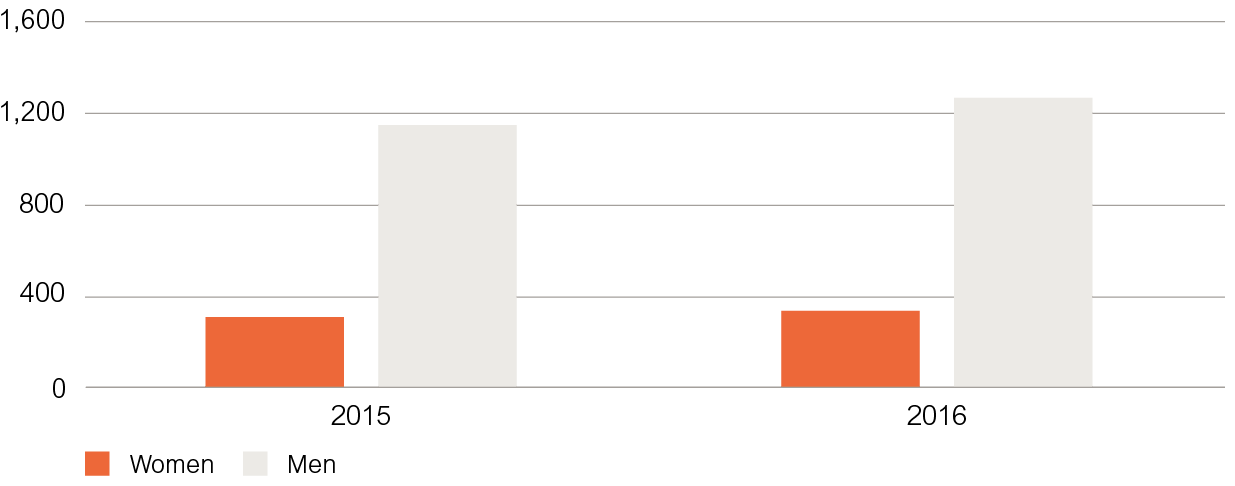
Number of employees trained in ethics and anti-corruption
Number of employees per gender
Number of employees per employee category
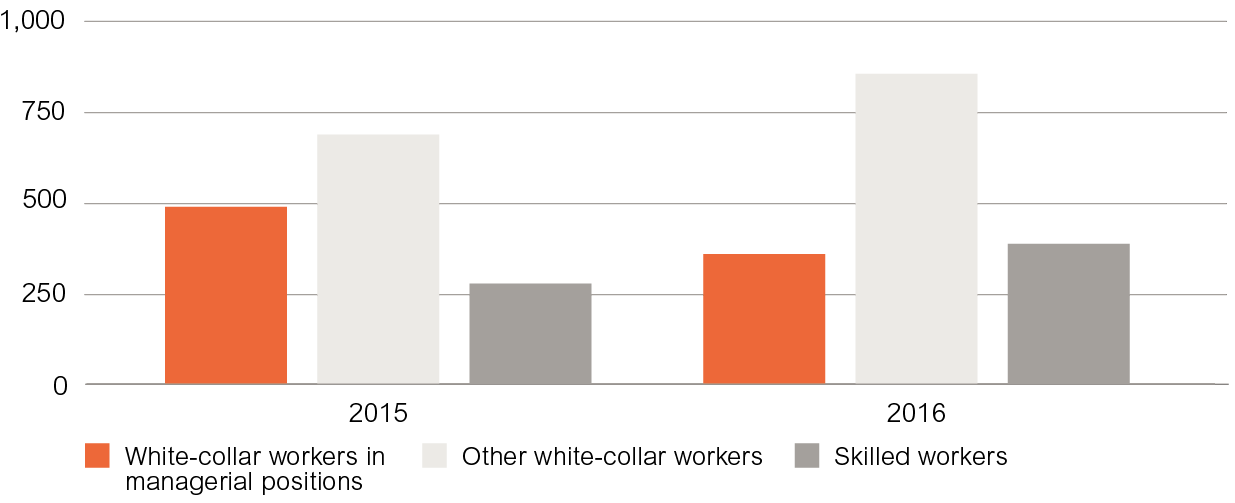
Statistics regarding ethics courses include the number of employees that have gone through the Ethics Round, introduction education and Leading Peab.
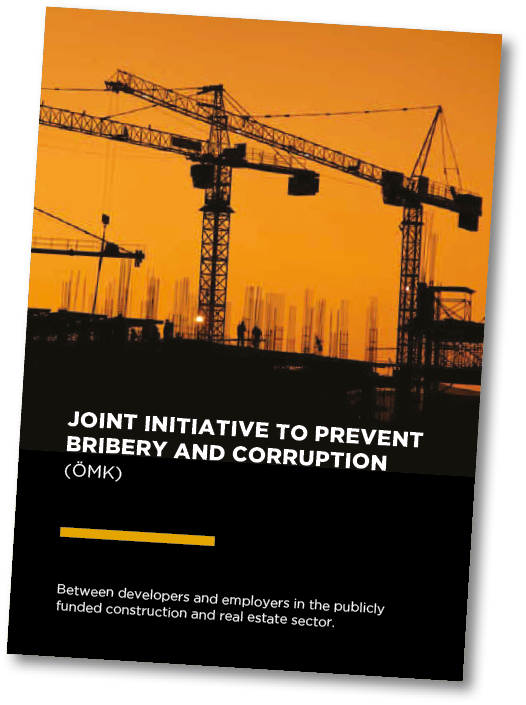
Peab is one of the parties in the Joint Initiative Against Bribes and Corruption from 2015. The agreement levels the playing field in the industry and provides practical guidance in commonly occurring situations.
1,600
Some 1,600 employees were trained in ethics and anti-corruption in 2016 within the framework of the Ethics Round, Introduction course and Leading Peab.

Systematic work based on preventive education and explicit consequences for transgressions is the foundation of our work on ethics.