
External circumstances and the market

The pandemic characterized 2020
When COVID-19 blossomed up in the beginning of 2020 the world was hit by a virus that forced country after country to shut down social life and businesses. In addition to the personal tragedies resulting from the pandemic, social structures and economies have suffered greatly. The negative financial effects have been dramatic and hit sections such as the hospitality industry, the entertainment industry, culture and brick and mortar retail. However, financial stimulus from governments around the world have been quick and resolute. This has softened financial blows but at the same time created public debt that must be dealt with at some point in the future. After a financial recovery in the third quarter a second wave of the pandemic led to concern that the positive development would be delayed. The global economy is expected to have contracted by around 3.7 percent in 2020. The forecast for growth in 2021 indicates an increase of five percent. The downturn in 2020 appears to have been more dramatic in Europe and there is a risk that recovery will also take longer. In addition to the pandemic the presidential election in the US dominated the news. Because of this the spotlight has been on the current situation since the circumstances in the coming year have been uncertain – politically, financially and healthwise. With the outome of the American elections and changed majorities, the previous international political uncertainty will most likely die down and both trade and environmental policies will be similar to the way they were before.
The world is in constant change and there are megatrends that affect development in our society. The Nordic countries have pledged to follow Agenda 2030 with its 17 global goals for sustainable development. Several of these goals influence actions on a national level and how we develop our communities in the future. Among the goals are environmentally and socially sustainable cities, safe communities, energy and climate issues, biodiversity, sustainable consumption and innovative and sustainable industry. These are matters that create most of the framework for social development and make the construction and civil engineering industry an important actor. The climate challenge entails both building environments that can handle climate changes such as actively adjusting and designing what is being built to have the least impact on the climate, and turning the negative tide like contributing to the process of creating the sustainable and smart cities of the future.
Another comprehensive megatrend is the way we are affected by, and can utilize, digitalization. COVID-19 has been the catalyst in driving us to quickly adapt to new norms for how we use digital technology in daily life – when we shop, in how we work and travel and how we design our homes and non-residential space. The future zoomed into 2020.

The economy in Sweden
The Swedish economy began to recover during the second and third quarter 2020 after a drop due to COVID-19. The manufacturing industry and retail sector gave off weak positive signals while the service sector continued to be pessimistic. Recovery may come gradually, delayed by slow growth in most of the service sector, which will leave unemployment on a permanently high level and dampen private consumption. The growing spread of the virus can postpone continued recovery and have a negative effect on a positive trend in exports in 2021. At the same time more public investments and a strong housing market soften the financial downturn and contribute to putting households into a better frame of mind.
Divided construction market in Sweden
Developments in the Swedish construction market mirrored both the economic decline and government stimulus. After three years of contracting investments, started-up building construction investments rose slightly in 2020. The dramatic drop in the economy resulting from the pandemic primarily affected construction of single homes and tenant-owner apartments while investment funds for rental apartments and student housing lifted these sectors. In other building construction investments private premise construction was negatively affected by the downturn in the economy and the decline in net sales in brick and mortar stores, hotels and parts of the service sector. At the same time public building construction investments rose due to well needed programs, increasing public civil engineering investments and stimulus packages. In 2021 housing construction is expected to decline somewhat and then turn up again in 2022. Construction of private premises is expected to rebound in 2021 and public construction and civil engineering investments are expected to continue to grow in 2021.
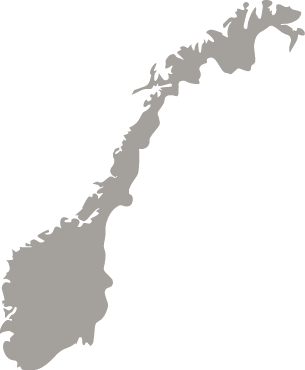
The economy in Norway
Recovery in the Norwegian economy has been boosted by a strong demand from households, low interest rates and rising home prices. Nonetheless the continued spread of the virus increases uncertainty and can delay global economic recovery which is negative for oil production and investments in the sector. In addition, harder restrictions in the country affect the service sector negatively. Unemployment, which rose rapidly during the year, is expected to noticeably contract already in 2021. On top of that, there are resources for an expansive finance policy. In 2020 a finance stimulus package was launched that created opportunities for capacity raising investments and other development projects in the oil industry.
Housing construction slowed upturn in Norway
After a downturn in building construction in Norway 2019 volumes turned upward in 2020. However, development was splintered and private premise construction drove growth. Industrial construction was surprisingly strong but growth was apparent in offices and retail as well. New production of single homes and apartment buildings contracted in 2020. The weak development in housing occurred despite rising prices for homes, low interest rates and a good balance between supply and demand. This can therefore entail the right conditions for growth in housing investments in a year’s time. Other building construction is expected to contract in 2021. The forecast for civil engineering investments indicates rising volumes in 2021.

The economy in Finland
Compared to the rest of Europe Finland has only suffered slightly during COVID-19. Although exports have taken a hit, industrial production has overall done rather well by EU standards. A boost in the electronics industry has compensated for downturns in the metal and timber industries. Nonetheless industrial companies report continued concern due to fewer orders received and continued global caution. Forward looking indicators indicate that recovery can be weakened by restrained investments and growing unemployment. Finland also struggles with certain structural problems that in part originate in an aging population.
Apartment building construction boosted Finnish construction market
Total building construction investments increased slightly in 2020. However, contracting industrial investments slowed growth. Apartment building construction recovered after the drop in 2019 while single home construction developed horizontally. Housing prices are rising and if unemployment can be limited this can create positive conditions in the coming year as well. In other building construction private and public premises reported dramatic increases in 2020 while the sector was otherwise weighed down by weakening industrial building construction investments. Construction of private premises is highly affected by how recovery in the global economy develops. Housing construction is expected to decline somewhat in 2021 and then turn upward in 2022. Other building construction and civil engineering construction are showing signs of developing horizontally in 2021.
Source of text and graphics: Navet AB
Investments
2016-2021F*
Danish pavement market on par with 2020
The level of activity in new construction on state roads continues to be very low in Denmark and the government’s range of new projects is not expected to increase before 2022-2023. However, the 2021 municipal market for roads is expected to remain on the same stable level as in 2020, for both new construction and maintenance. The asphalt industry expects the entire volume of asphalt production and paving in 2021 to be around the same level as in 2020.
Source: Asphalt industry
Other major players
Although the Nordic construction market consists mainly of a large number of small companies operating under intense competition and on local markets there are a few very large, national players. Several of them also operate more or less on the entire Nordic market. Noteworthy companies in building construction are Skanska, NCC, Norwegian Veidekke, AF Gruppen and Obos as well as Finnish Kesko, SRV and YIT.
Some of the actors in road and railroad construction are Skanska, Veidekke, AF Gruppen, NCC, Svevia and Infranord.
Some examples of major Nordic industrial companies are Colas, Rudus, BetongIndustri and Nor-Betong.